Part 2: Local participation targets are failing – tender overload is breaking local content procurement

Key issues in supply chain to be addressed in 2026 (4-part series)
Local content procurement is meant to lift local participation, build capability, and keep value in the regions.
Let me be clear: the push for local participation is the right thing to do. Governments want it. Communities want it. Industry wants it. And at BenchOn, we strongly support it.
But there’s a hard truth we don’t talk about enough: the way we’re trying to achieve local participation is breaking both buyers and suppliers.
Here’s what’s happening…
Large organisations are told to open opportunities widely, and they do. Tenders go out. Invitations are broadcast. And suddenly, procurement teams are staring at hundreds, sometimes thousands, of responses.
On paper, that looks like success.
In practice, it’s chaos.
Procurement teams are overwhelmed. Evaluation slows. Risk increases. And decision-makers quietly revert to “safe” suppliers because they simply don’t have the capacity to fairly assess everyone.
Meanwhile, suppliers are drowning in noise. They’re monitoring endless portals, responding to opportunities that don’t quite fit, and spending time chasing work they were never really suited for. Eventually, many just stop engaging.
This is the paradox we’ve created: trying to include everyone ends up excluding the right ones.
The real problem in local content procurement: we filter too late
Most procurement processes apply meaningful filtering after the tender is released. By then, the damage is already done.
Suppliers have invested time and money responding. Procurement teams are buried in evaluation. And frustration builds on all sides. If your organisation is working within policy-based local participation requirements, it is also worth understanding how those requirements are implemented, for example, Local Jobs First in Victoria.
Local participation doesn’t improve because you invite more responses. It improves when you:
- give opportunity broadly,
- filter intelligently before the tender stage, and
- make outcomes transparent.
Pre-qualification before the tender – not after
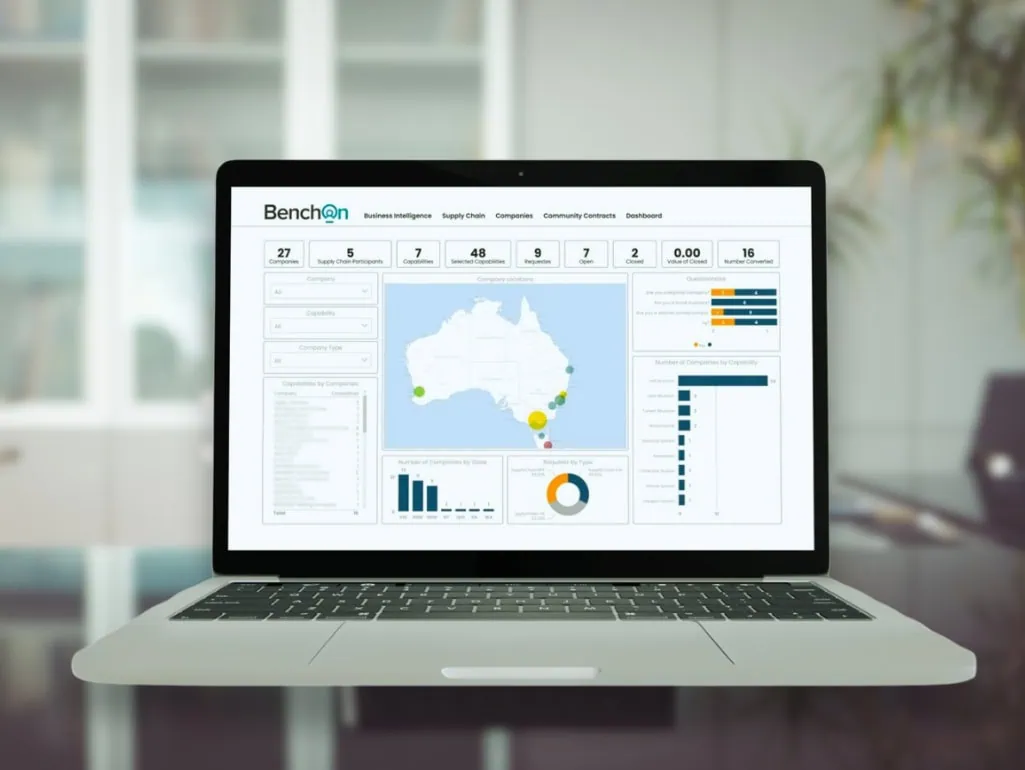
This is where BenchOn’s proprietary supplier pre-qualification approach changes the equation. Instead of releasing a tender into the open and dealing with the fallout, sourcing organisations can:
- start with thousands of suppliers across the market,
- apply clear, capability-based criteria upfront,
- and narrow that pool down to the right handful of companies before the tender is even released.
The opportunity still goes wide. Suppliers are seen. But the tender itself is issued only to those who are genuinely suitable.
That means:
- far fewer responses,
- higher-quality bids,
- faster evaluation,
- and better outcomes for everyone involved.
Fairness doesn’t stop at filtering
There’s another part of this that matters just as much.
In most systems today, suppliers simply disappear from the process. They’re rejected, but they’re never told why.
BenchOn closes that gap.
Suppliers can see when they haven’t progressed and understand what disqualified them, whether it was certification, experience, capacity, or something else. That turns rejection into insight.
And insight is how local capability actually grows.
The goal isn’t fewer suppliers. The goal is better engagement with the right suppliers, at the right stage. Local participation can scale, but only if we stop overwhelming the system.
The goal isn’t fewer suppliers. The goal is better engagement with the right suppliers, at the right stage.
Local participation can scale, but only if we stop overwhelming the system.
If your team is trying to lift participation without creating tender overload, talk to BenchOn about filtering earlier and keeping outcomes transparent.
FAQs
How does local content procurement break down under volume?
It breaks down when the process becomes a numbers game. Tender overload procurement creates noise, not better local outcomes. Buyers lose time sorting responses, and suppliers waste time bidding on opportunities they were never a fit for.
What is the fastest way to stop tender evaluation overload without shrinking the market?
Move the work earlier. Pre-qualification before tender lets you keep the opportunity broad while inviting only the right suppliers to bid. That is how you protect fairness while still being practical about evaluation capacity.
What should a buyer filter on before issuing a tender?
Use capability-based criteria procurement that is clear and auditable. Think required certifications, relevant project experience, capacity, location constraints, safety systems, and delivery timeframes. Done properly, early supplier filtering reduces volume without excluding good local suppliers.
How can buyers improve local participation targets without drowning everyone in admin?
Targets lift when you improve fit, not when you increase invitations. A structured capability-based pre-qualification process helps you identify the right local suppliers earlier, and then track outcomes using the same criteria across packages and projects.
What is the difference between local content requirements procurement and “invite everyone” tendering?
Local content requirements procurement is about measurable outcomes, not maximum responses. “Invite everyone” often hides the best suppliers in a giant pile of low-fit responses, pushing buyers back to familiar names.
How do you keep local supplier shortlisting fair and defensible?
Publish the shortlisting criteria upfront, apply them consistently, and record the reason each supplier progressed or did not. That approach makes reducing tender responses a fairness improvement, not a gatekeeper exercise.
What should suppliers receive when they do not progress?
They should get transparent supplier feedback. If a supplier is filtered out, supplier rejection feedback should tell them what was missing, such as certification, experience, capacity, or scope alignment. This turns rejection into a pathway to qualify next time.
What should be measured to prove this approach is improving outcomes?
Track how many suppliers were in the market view, how many were shortlisted, how long the evaluation took, bid quality, and local outcome measures against the same criteria. This shows whether filtering earlier improved local content procurement outcomes, not just speed.