
Part 3: Supplier visibility – if you can’t see your supply chain, it isn’t resilient
Key issues in supply chain to be addressed in 2026 (4-part series)
I often ask project teams a simple question: “Do you really know your supply chain, or do you just know a few names?”
Most people pause. Because they know the answer.
True supply chain resilience depends on supplier visibility. Not outdated spreadsheets. Not one-off reports. Living, current insight into who is active, where capability exists, and where gaps are forming. Too often, organisations rely on static analysis that’s already out of date the moment it’s delivered. By the time an issue shows up in a report, it’s usually already a problem on the ground.
If your team needs to keep decisions defensible under pressure, it also helps to stay anchored to the Commonwealth Procurement Rules.
Supplier visibility shows patterns early, before delays appear
What teams actually need is the ability to see patterns as they emerge:
- where supplier capacity is thin,
- where suppliers are overloaded,
- where regional capability exists,
- where capability gaps are forming
- where supply chain risk is increasingand where single points of failure are quietly developing.
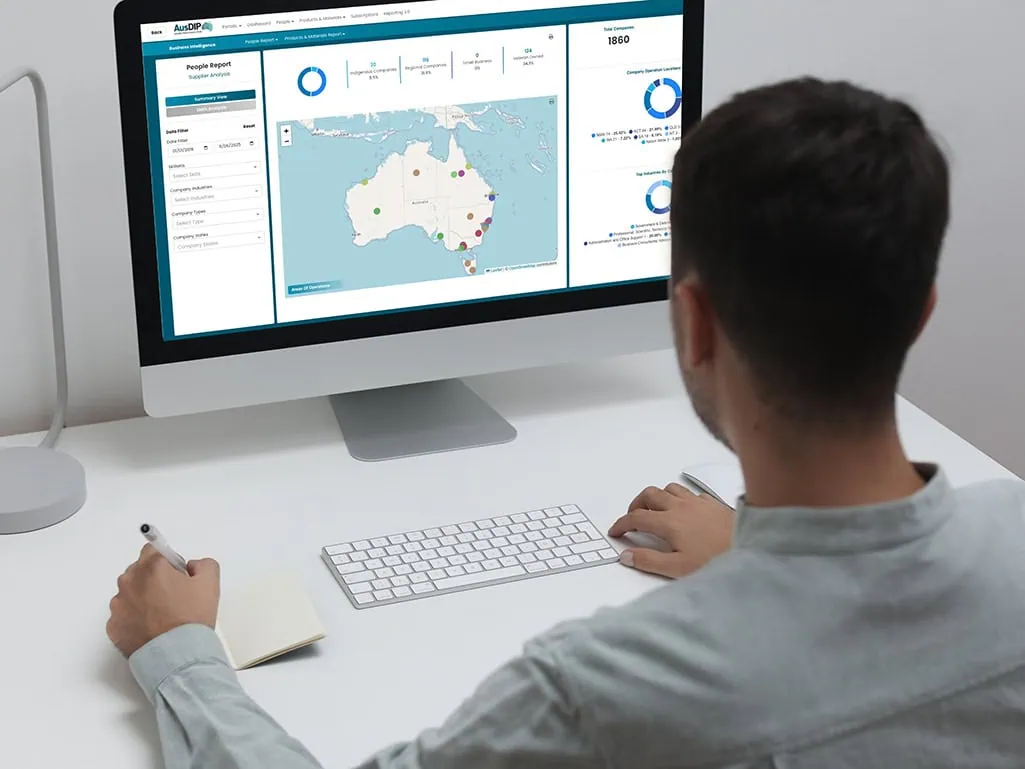
That’s why we’ve invested so heavily in BenchOn’s insight and reporting capability. When supply chain data is structured and updated through real engagement, organisations can move from reacting to issues to preventing them.
Resilience isn’t built during a crisis. It’s built by seeing problems early and acting before they escalate. If your team wants stronger supplier visibility to spot capability gaps before they lead to delays, talk to BenchOn.
FAQs
What is supplier visibility in procurement?
Supplier visibility is your ability to see, in a current and structured way, who is participating in the market and where capability exists across your scope. It helps procurement teams identify concentration risk and capability gaps early, before a sourcing cycle or delivery phase is under pressure.
What is the difference between supplier visibility and supply chain mapping?
Supply chain mapping typically involves documenting nodes and links across tiers, often as part of a project or audit. Supplier visibility is the ongoing ability to monitor the supplier layer as it changes, enabling you to detect risks and gaps as they form, not after the fact.
What should you measure to prove that supplier visibility is improving resilience?
Track measures that link visibility to outcomes:
- Number of suppliers engaged per capability area
- Concentration risk, for example, how many packages rely on the same supplier or the same region
- Lead time to identify a gap, from the first signal to the action taken
- Tender cycle indicators, including response volume and evaluation time trends
- Disruption outcomes, such as avoided delays due to earlier intervention
What causes “false confidence” in supplier visibility?
False confidence comes from relying on:
- Legacy preferred lists that are not regularly refreshed
- Supplier names without capability evidence
- One-off reports that quickly go out of date
- Assuming visibility exists because you can see tier-one suppliers, while tier-two and specialist dependencies are hidden
How do you identify single points of failure before they impact delivery?
Look for concentration signals:
- A capability area with very few viable suppliers
- Multiple work packages depending on the same specialist subcontractor chain
- Geographic choke points where location or access constraints narrow the market
- Dependencies that sit behind different contracts but rely on the same underlying provider
This approach aligns with established risk practice; limited visibility increases the likelihood that critical dependencies remain hidden.
How often should supplier visibility data be refreshed?
Refresh should be continuous where possible, with governance that supports regular review. If you only refresh annually, you will miss shifts in participation, capability, and risk signals. Organisations aiming for resilience typically move toward more frequent monitoring and earlier risk identification.
Does supplier visibility require collecting supplier capacity and availability?
Not necessarily. Supplier visibility can be built from structured capability information and engagement signals without claiming to capture or verify live capacity and availability. The key is to use consistent, auditable information to detect gaps and concentration risk early, then engage the market to confirm options before a crisis point.
What is the minimum set of information needed to improve supplier visibility?
Start with what is most useful for early decisions:
- Clear capability areas aligned to the scope
- Geographic coverage at a practical level
- Relevant certifications and constraints that directly affect eligibility
- Evidence signals that support capability claims, such as past scope types or delivery categories, without turning the process into a document-heavy burden
Then ensure the structure supports reporting that teams can use.
How does supplier visibility support government and critical supply chains?
Government resilience work increasingly focuses on identifying vulnerabilities and improving the ability to monitor risks across essential supply chains. Better supplier visibility enables earlier identification of gaps and dependencies, providing practical input for resilience planning.